Skip to content

Gummy Robotics Lab · Independent research

Robotics in service of human life.

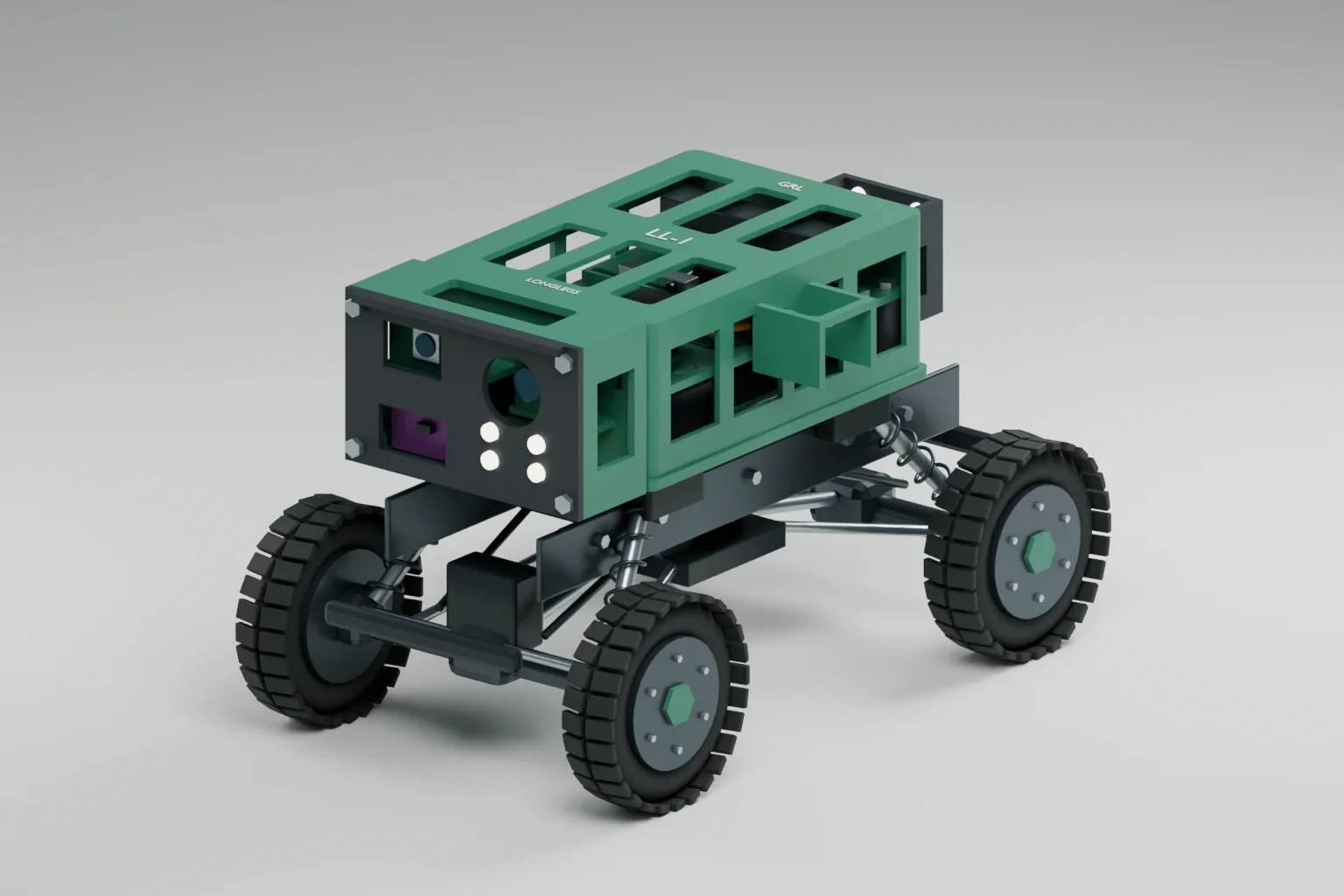
Engineering render of a compact four-wheel LongLegs crawler with a low jade sensor carrier, forward cameras and removable electronics deck.

Engineering visualization LongLegs LL-1, the lab's priority build, rendered from its editable CAD assembly. Unbuilt: donor dimensions are approximate, and this is not a physical result.

  1. Front sensor bay with forward camera
  2. Removable printed jade carrier
  3. Purchasable 1/18 crawler donor

We build unusual machines and investigate how they see, move and respond. Our purpose is to turn hands-on robotics research into ideas that could help prevent accidents and protect people.

How to read this page

  • Photographed Real hardware, on the bench
  • Engineered Designed in CAD, not yet built
  • Concept An idea, illustrated
How we read evidence

Work you can inspect

One machine on the bench. One in engineering. Five still ideas.

Every image keeps its evidence class beside it. A render is a design, not a photograph; a priority is not a result.

Engineering render of a compact four-wheel LongLegs crawler with a low jade sensor carrier, forward cameras and removable electronics deck.
Engineering visualizationLongLegs LL-1 editable engineering assembly on an approximate Ascent-18 donor reference. Unbuilt; physical fit and operation remain unverified.
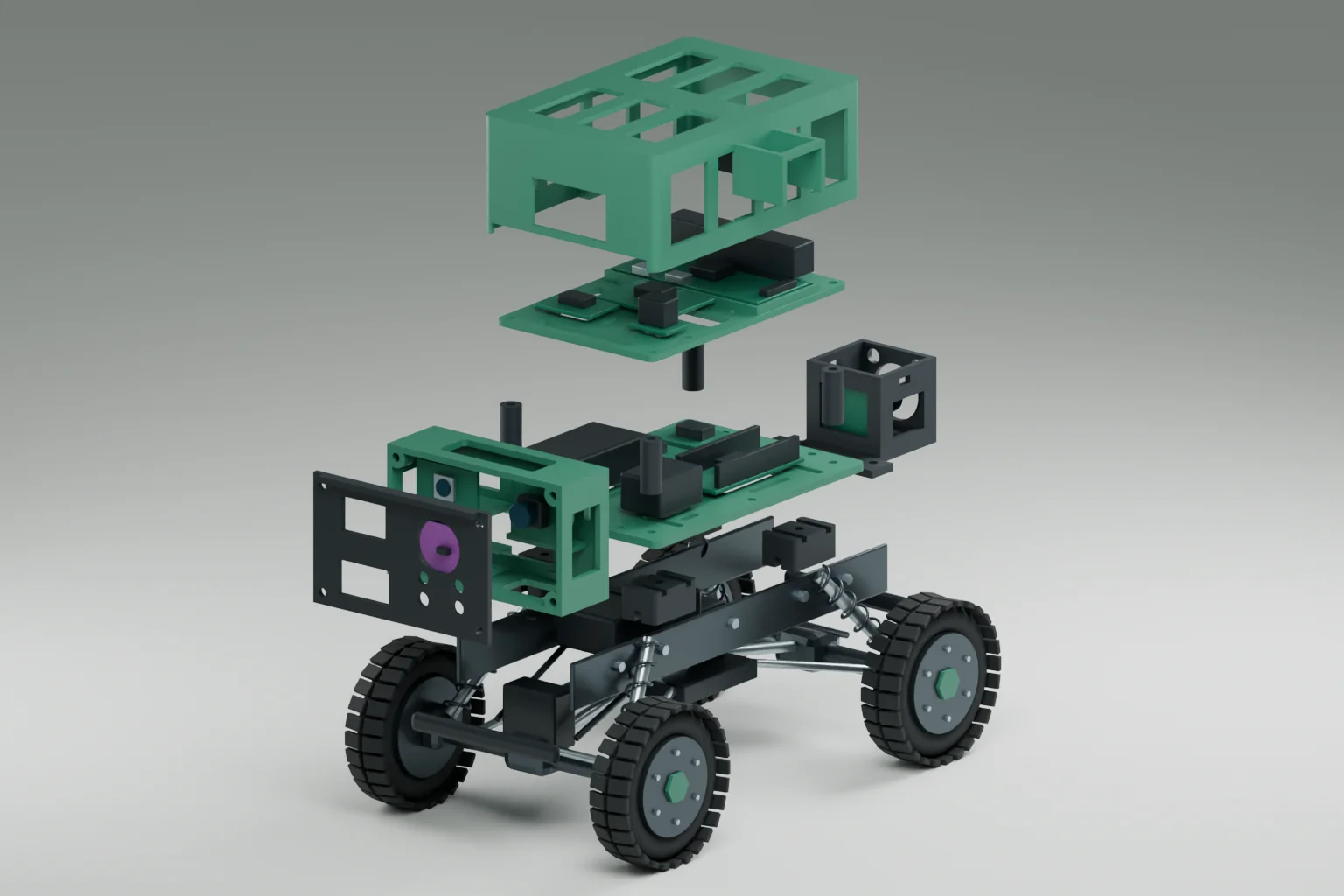
Exploded engineering view of LongLegs LL-1 showing the removable deck, electronics retention, sensor guard and mounting parts above a reference crawler.
Engineering visualizationLL-1 retrofit parts separated to show assembly and service access. Manufacturer dimensions and provisional interfaces are identified in the design package.

Priority development · Unbuilt

LongLegs LL-1

Small enough to enter. Built to bring a view back.

A compact observation crawler for investigating difficult-to-access spaces, built around a purchasable 1/18 Redcat Ascent-18 High Steer donor. Search-and-rescue support is a qualification goal, not an achieved capability.

Developed

  • Editable CAD assembly
  • Printable retrofit parts
  • Purchasing and wiring records
  • Non-actuating software bench

Not yet verified

  • Donor fit
  • Powered operation
  • Field performance

Next gate Measure the donor interfaces, print the fit coupon, and qualify independent manual control and stop behavior.

Inspect LongLegs LL-1
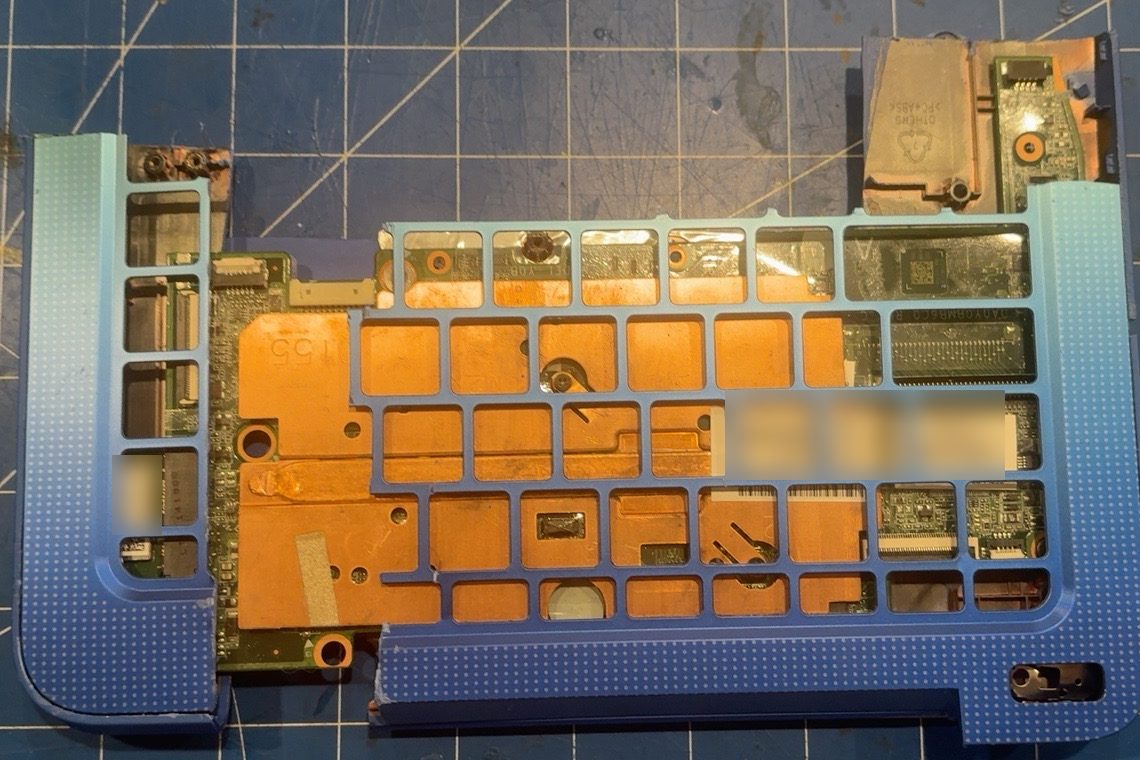
A circuit board seated in a blue cradle frame beneath a copper heat spreader, photographed on a gridded cutting mat. Component labels are blurred.
Owner photographSL1 computer cradle with its copper spreader, on a cutting mat.

On the bench · Unqualified

Short Legs SL1

Our owner-assembled six-wheel research platform, and the lab's one physical machine. Bench photographs document camera, display and computer-cradle fit-up. It is a different platform from LL-1, not its predecessor.

Done · owner-reported

  • Six-wheel MC-6C platform assembled by the owner
  • Camera and display fit-up on the bench (photographed)
  • Computer cradle with copper spreader prepared (photographed)

Waiting

  • Additional parts still needed

Next

  • Better photographs once the parts are fitted
  • A first outdoor run — not yet attempted

No outdoor run, autonomous driving, electrical qualification or independent stop has been demonstrated.

Follow the SL1 build

Five concepts, one stage

None has been built or physically tested. Listed by registry number, not maturity.

Questions worth following

Questions first. Answers have to be earned.

Five research briefs connect the machines to what we want to learn. None announces a solved capability.

  1. What can a machine learn from the ground?

    Proposed research into whether an extra observation earns its cost.

    Active Terrain IntelligenceGRL-AT01 · Proposed research

  2. Can a camera reveal what the chassis is doing?

    Optical telemetry research. The photographed camera fit-up is not a calibrated estimator.

    Ghost ChassisGRL-GC01 · Research direction

  3. When is a better answer too late?

    Fast visual response and slower reasoning have different roles. No hard-real-time controller or interception benchmark is demonstrated.

    Reflex and Reason VisionGRL-V01 · Research proposal · Model Lab lineage

  4. Which improvements survive unfamiliar terrain?

    A working paired simulation is the first building block. Physical transfer remains unverified.

    Evolution LabGRL-E01 · Working digital building block

  5. What makes road trials repeatable?

    A planned Road Course with its own apparatus, not a completed trial.

    Road CourseGRL-R01 · Planned program

All research briefs

Emerging research note · Proposed

Beyond vehicles

We are exploring low-cost perception and sensing ideas for civilian harm prevention: anticipating path conflicts, understanding shared workspaces, and making hazards easier to notice.

These are proposed research directions, not finished safety products. None has a working demonstration or a page of its own yet.

Explore GRL research

Proposed research directions

Foresight
Predictive path-conflict warnings in controlled tests
SafeReach
Awareness of people near a low-energy test mechanism
TrackZero
Stable visual tracking with modest hardware
SecondSight
Low-distraction pedestrian assistance research
LifeSign
Possible human-presence cues for staged search-support research
Skywatch
Passive observation of harmless airborne objects or falling debris

How the lab learns

A question becomes a test. A test earns the next revision.

  1. Define a question

    Name what you want to learn and what would count as an answer.

  2. Keep the configuration

    Record the setup so the run can be repeated and challenged.

  3. Compare outcomes

    Run the alternatives side by side. Failures stay in the record.

  4. Separate observation from evidence

    What was recorded stays apart from what we think it means.

  5. Make the next bounded change

    Carry one lesson into one revision, then test again.

Paired simulation, replay and browser-local evidence records support this work. They are owner-only instruments. The current six-wheel model is an uncalibrated research proxy, not a measured digital twin or proof of physical performance.

The machine registry

All seven machines

  1. No. 07 LongLegs LL-1 Ground Priority development · unbuilt
  2. No. 01 Short Legs Ground On the bench
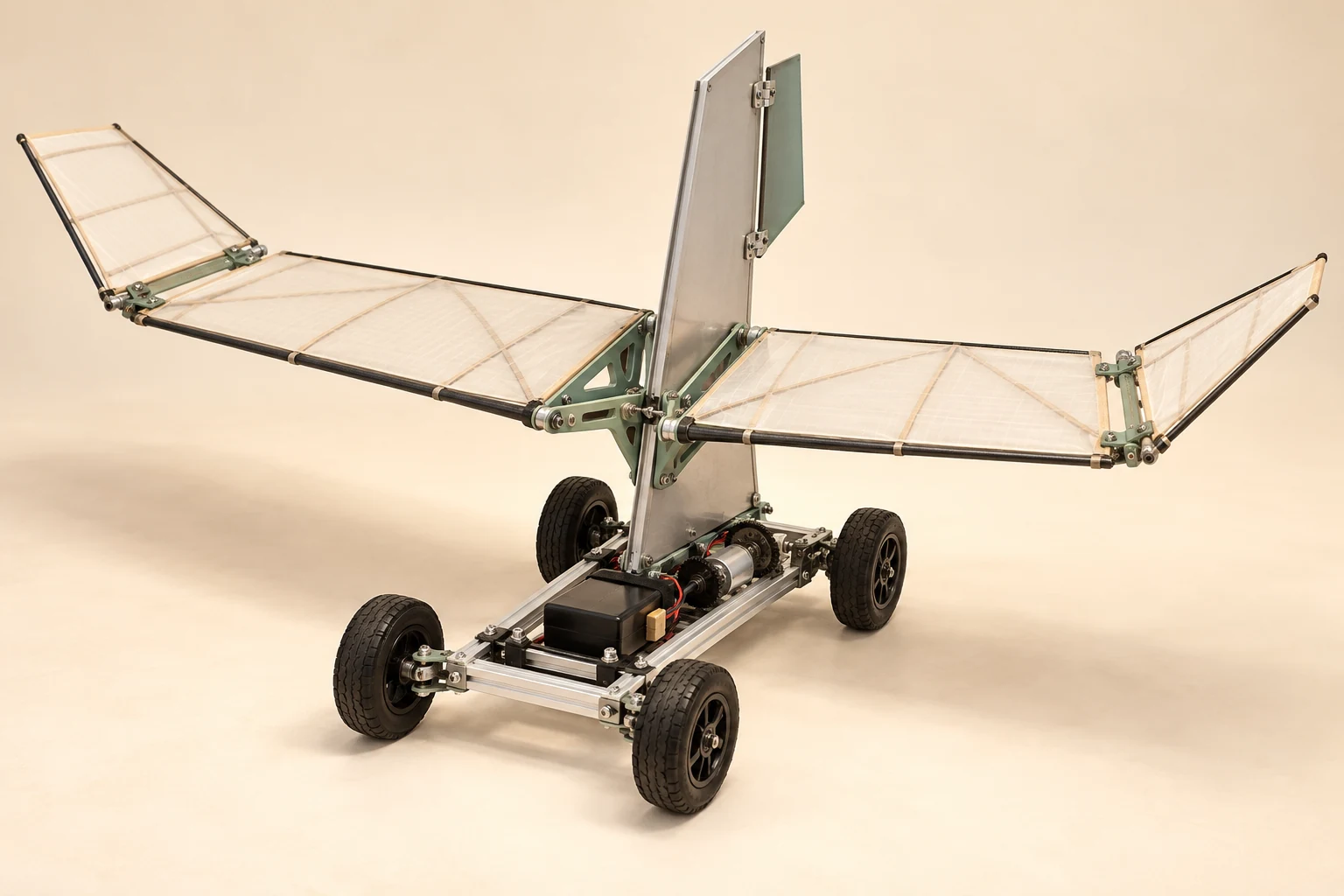
  3. No. 02 Hyena Hybrid Concept
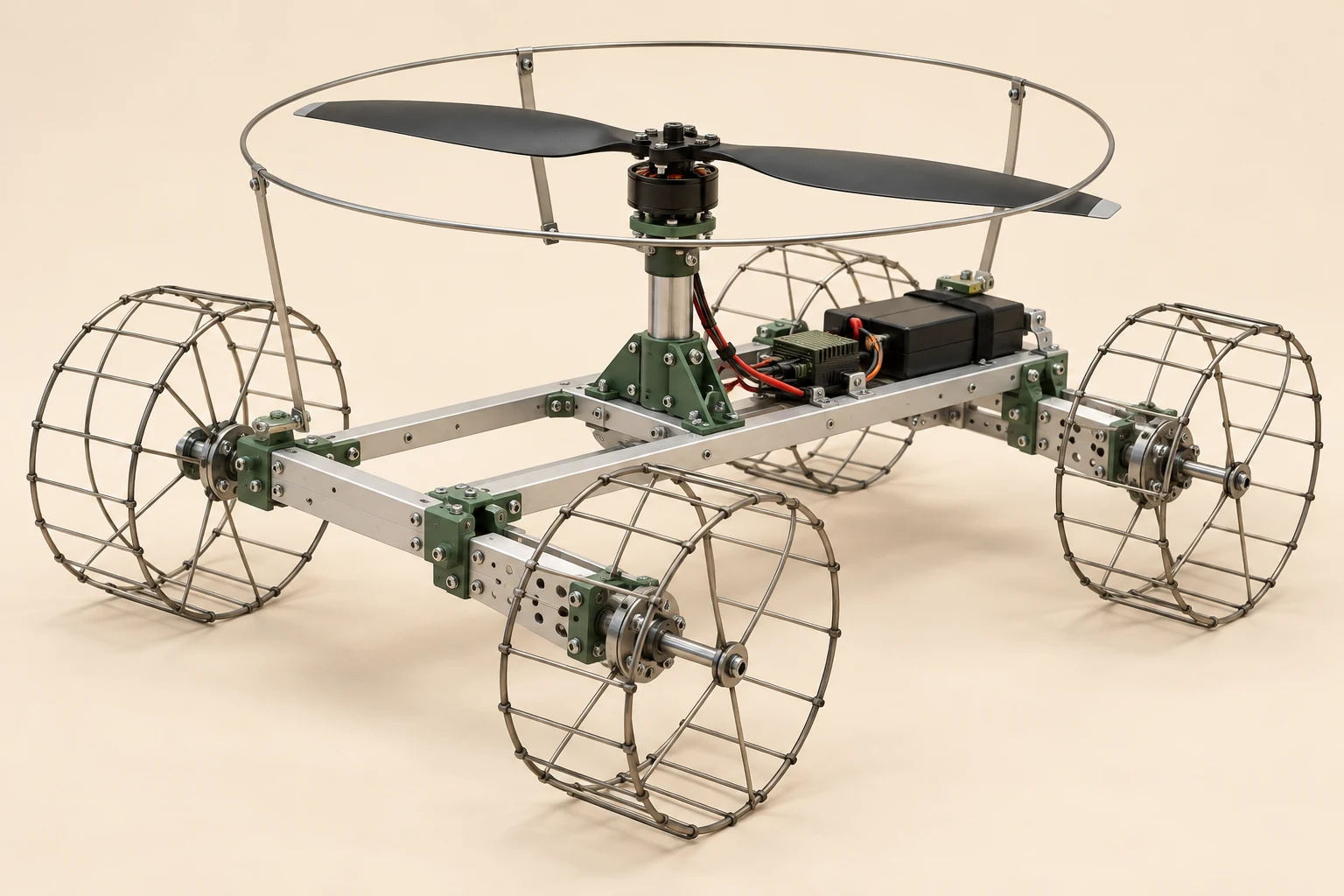
  4. No. 03 Rotor-assisted rover Hybrid Concept
  5. No. 04 Scurrying Hopper Hybrid Concept
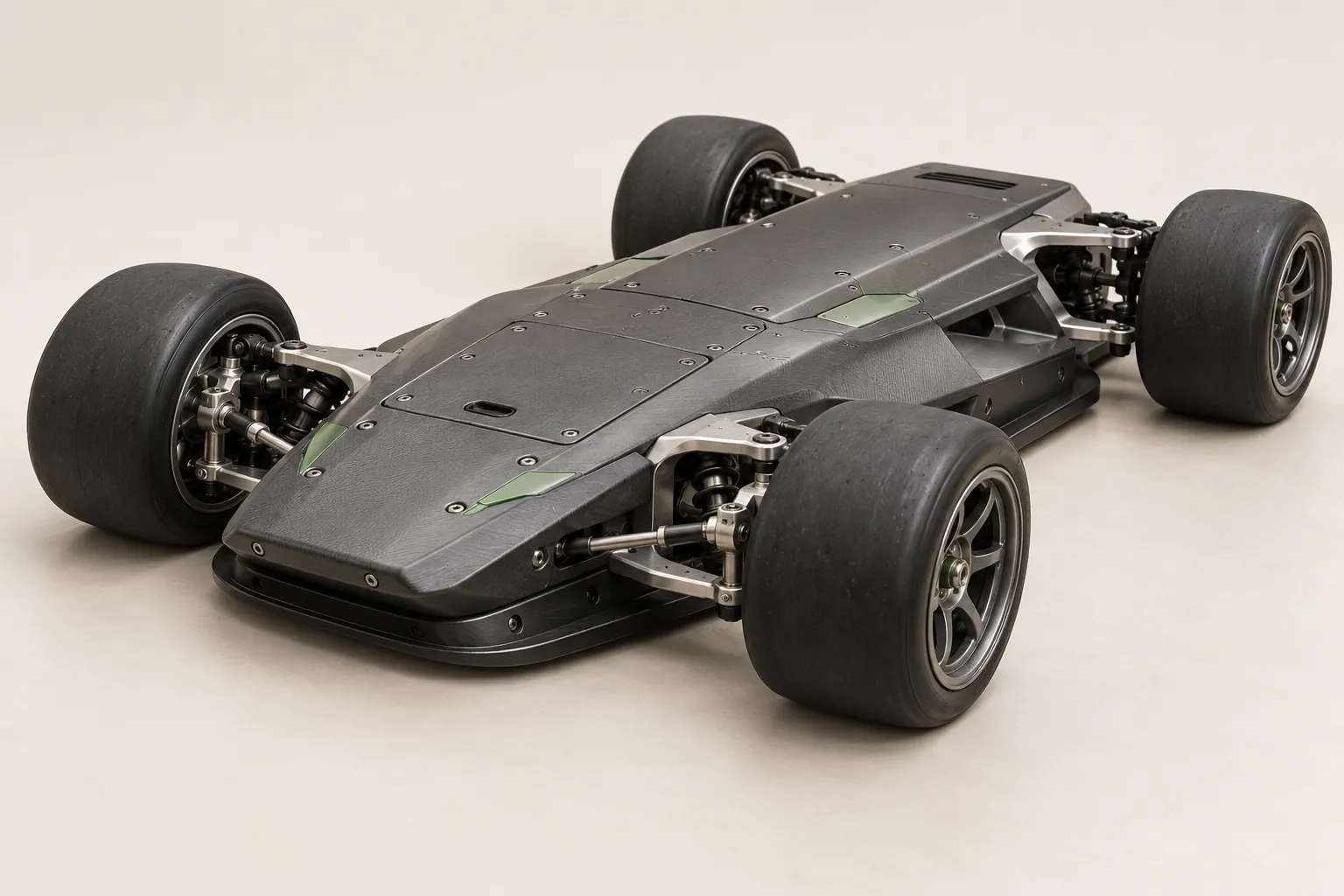
  6. No. 05 Land Bullet Ground Concept
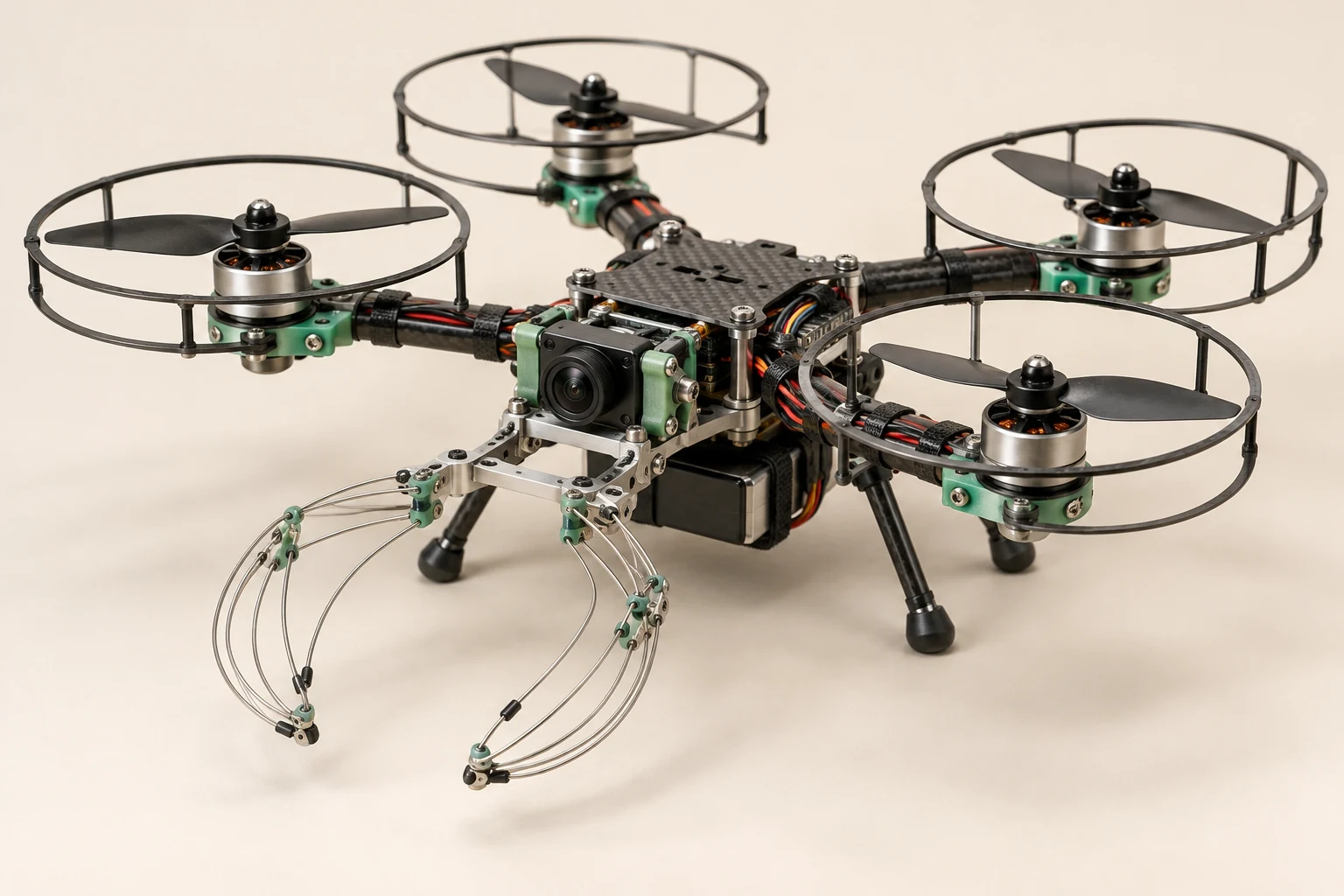
  7. No. 06 Mosquito Interceptor Aerial Concept
Search and filter the registry

From the lab journal

Dated work, with its edges showing.

LongLegs LL-1 enters engineering

A purchasable 1/18 crawler becomes the basis for a compact inspection and search-support program. Its own package brings editable CAD, removable printed hardware, a full purchasing and wiring plan, and a non-actuating software bench. Fit, powered behavior and field trials remain separate physical gates.

Short Legs is on the bench

Two owner photographs record camera, display and computer-cradle fit-up. More parts are needed before the planned first outdoor test; better photographs are a future update. Every other machine is presented as a concept at the same stage.

Read the lab journal